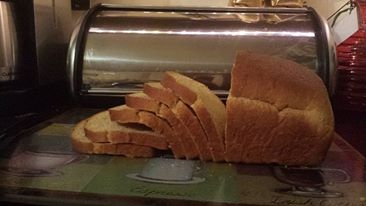
Ingredients
Method
- Lightly grease a large bowl to use for rising the bread.
- Melt the butter.
- Mix 1 tablespoon honey with the warm water. Add the yeast. Let stand for 5 minutes.
- Place 2 cups flour, the dry milk, and the salt in a large bowl. Blend until well mixed.
- If using your stand mixer, turn it on to speed 2 and add the remaining honey and the water/yeast mixture. Add the melted butter. (If mixing by hand, mix well.)
- Add the remaining flour 1/2 cup at a time until the dough is no longer sticky.
- Knead with the stand mixer for 2 minutes, or knead by hand for 10 minutes.
- Once the dough becomes smooth and elastic, put it into the lightly greased bowl. Turn it once and cover with a light towel. Let it sit in a warm spot until it doubles in bulk, about an hour.
- Punch the dough down. Roll the dough into a rectangle and roll up tightly.
- Pinch the ends and place in a greased loaf pan.
- Cover and let rise in a warm place until nearly double in size.
- Bake at 400°F (205°C) for 15 minutes. Reduce the temperature to 350°F (180°C) and bake 20 to 30 minutes longer. When you tap the loaf, if it sounds hollow, it's done.
- Remove from the pan and immediately place on a cooling rack.
Nutrition
Notes
Makes 1 loaf. I use a bread machine to mix my dough. I've never made it with store-bought whole wheat flour, only fresh ground; if you're using store-bought, you might want to mix in some unbleached white flour and play around with it. I tried making it with raw milk instead of dry milk and water and it was not as good, but try it if you don't have dry milk. If you have a source of local, pure, raw honey, ask for the honeycomb as well; consuming the comb increases your resistance to local allergens, and I find it makes for a more moist, melt-in-your-mouth bread. Yeast often will not proof well in certain types of metal or plastic containers. Glass is best because it is nonporous, but ceramic or enamel also works. High in selenium and thiamin.