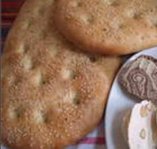
Ingredients
Method
- Preheat the oven to 355°F (180°C).
- Sprinkle the yeast in 1 cup of warm water in a nonreactive bowl. Let it sit for 30 minutes until it foams.
- In a large bowl, whisk together the flour and salt. Make a well in the center and add the yeast-water mix and oil. With hands or a wooden spoon, mix to create a cohesive dough. If needed, add a little more warm water.
- On a floured surface, knead the dough until it no longer sticks to the hands and is soft and malleable. Form into three flat loaves, round or rectangular, about 1/2 to 3/4 inch high.
- Place on baking sheets, cover with a towel, and allow to sit until doubled in height, about 45 minutes.
- Poke the loaves in several places with your fingers. Brush lightly with oil and sprinkle evenly with sesame seeds (approximately 1 tablespoon per loaf).
- Bake at 355°F (180°C) for 30-40 minutes, until golden.
Nutrition
Notes
In Greek: λαγάνα, pronounced lah-GHAH-nah.
Lagana was originally an unleavened bread but, over the years, a little yeast has crept into the recipes.
Orthodox Lenten restrictions dictate the use of olive oil, although a substitute oil can be employed if you are not strictly observing. Personally, I feel the olive oil lends Lagana its unique and internationally recognizable flavor, and it's healthier than most alternatives.
This recipe is easily doubled or tripled. Bake on a cookie sheet or pizza stone.
Lagana loaves harden quickly, so serve them the same day they are baked if you can. If you aren't planning to eat it immediately, cool the loaves completely, wrap in airtight plastic or seal-a-meal, and freeze. They will keep well in the freezer for several months.