Ingredients
Method
Prepare the Vegetables
- Finely chop the onion. Peel the eggplant, then grate the eggplant, zucchini, and carrots. Peel and seed the tomatoes, then finely chop. Chop the parsley. Juice the lemons.
Blanch the Grape Leaves
- Bring 8 cups of water to a boil in a large pot and add the juice of 1/2 lemon and 1 teaspoon salt. Carefully unroll the leaves (do not separate). Turn off the heat and place the leaves in the hot water for 3 minutes.
- Remove the leaves, place them in a bowl, and cover with cold water. When cooled, drain in a colander. It is not unusual for many of the outer leaves in the jar or can to be damaged, or to tear while using. Set these aside to use later in the recipe.
Filling
- In a large saucepan, heat 1/2 cup of olive oil and sauté the onion for about 2-3 minutes. Add the grated zucchini, eggplant, and carrots, and cook over low heat for 10 minutes.
- Add the tomato pulp and continue to cook for 5 minutes. Remove from the heat, put in a bowl, and set aside to cool for 15 minutes.
- Add the rice, parsley, remaining salt, and pepper, and mix well with a spoon until blended.
Roll the Leaves
- Gently separate one leaf and place it shiny side down on a work surface. Cut off the stem and discard.
- Place one teaspoon of the filling on the leaf at the point where the stem joined the leaf. Fold up the bottom of the leaf over the filling, then each side inward in parallel folds, and roll up the leaf. The roll should be firm, not tight, as the filling will expand during cooking. Repeat until all the filling has been used.
Cook the Dolmathakia
- Because it's easy for the leaves to burn while the filling cooks, put a plate or wooden souvlaki skewers in the bottom of a heavy-bottomed pot. The plate should fit as closely as possible to the sides. Put any unused or torn leaves on the plate or on top of the skewers. If you don't have a plate that fits or skewers, line the bottom of the pan with unused or torn leaves.
- Place the dolmathakia on top, packing them closely together (not squashed), seam side down, so they don't unroll during cooking. Layer them until all are in the pot (2-3 layers is best, but no more than 4 layers). Place several unused leaves over the top.
- Take another plate and place it upside down on top of the dolmathakia, with something to weight it down (a large unopened can of stewed tomatoes works nicely). Add 2 cups of water to the pot and cover.
- Bring the water to a gentle boil, add the remaining lemon juice, reduce the heat to low, and simmer for approximately 50-70 minutes. If the rice has cooked, they are done. If not, continue cooking for another 10 minutes and check again. Cooking time depends both on the type of pot used and the particular stovetop element.
Pressure Cooker Method
- If preferred, use a pressure cooker. No plates needed, but do use the skewers in the bottom. Pack the dolmathakia into the pressure cooker, add the 2 cups of water, close, and cook for 15-20 minutes at the first pressure mark.
Nutrition
Notes
In Greek: ντολμαδάκια γιαλαντζί, pronounced dohl-mah-THAHK-yah yah-lahnd-ZEE.
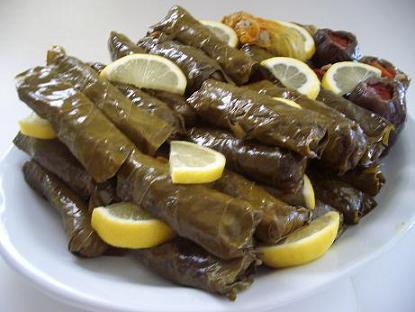
Makes about 100 pieces. Individual servings are 4-5 pieces on small plates as an appetizer; however, they can also be used as a side or main dish. Serve warm or at room temperature with avgolemono (egg and lemon sauce), lemon wedges, tzatziki, or unflavored yogurt on the side.
You can easily refrigerate any extra stuffing and use it as a side dish for another meal.
These will keep well in the refrigerator for about 5 days. Drizzle olive oil on top and cover to store, and return to room temperature before serving. They can also be frozen. If you do freeze, reheat in the microwave or by steaming and serve warm. Don't just thaw and eat.